
There is actually no single dialysis diet. Actually there are several different dialysis diets. Today, more than ever there are treatment options for people who need dialysis. Just as there are different types of dialysis treatments, the dialysis diet varies to match each treatment modality. The type and frequency of dialysis will impact your dialysis diet. Your renal dietitian will create a meal plan specific to your individual health needs and the dialysis modality you choose.
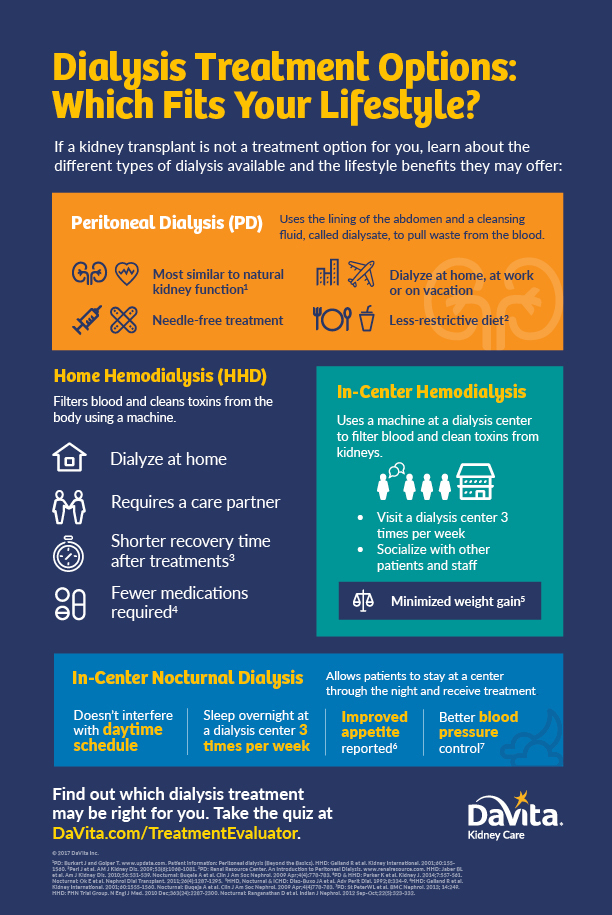
Dialysis Modalities
The types of dialysis are:
- Hemodialysis (HD)
- Traditional In-center Dialysis (ICHD)– typically treatments are three times a week at a dialysis center
- Home Hemodialysis (HHD) – treatments are done more frequently than ICHD, usually 5 to 6 times week, in your home
Hemodialysis cleans the blood of waste products and extra fluids by the use of a machine. It pumps the blood out of the body and through a filter or dialyzer, then back into the bloodstream.
On the other hand, peritoneal dialysis filters and cleans the blood within the body by filling the peritoneal cavity with a special solution called dialysate. The dialysate causes a gradient which draws waste products and fluid from the blood through the peritoneal membrane.
For more information on the different dialysis modalities, speak to your physician.
Diet Similarities
The basis of any dialysis meal plan is to:
- provide adequate calories and protein
- individualize sodium, potassium, phosphorus, calcium and fluid depending on individual status
- Provide adequate fiber (20 to 25 grams per day for all modalities)
In-center Hemodialysis (ICHD) vs. Home Modalities
The diet for ICHD is usually more restricted in potassium and fluid. This is because treatments are only performed three times a week. Fluid, waste and extra electrolytes build up in the blood between treatments. When dialysis is performed more frequently, it removes fluid and waste products more often. This allows more flexibility in the meal plan. In general, this allows the HHD and PD meal plans to be more liberal than the ICHD meal plan.
Hemodialysis vs. Peritoneal Dialysis
The dialysate used in PD contains dextrose, a form of sugar, which provides calories. For this reason, PD patients require fewer calories from food than HD patients. Patients with diabetes on PD are recommended to work with their dialysis team along with the physician managing their diabetes to maintain healthy blood sugar levels.
The dialysate for PD removes protein and amino acids. Since the treatment is performed daily, more protein is lost in dialysis compared to 3 times a week hemodialysis. Therefore, the requirement for protein is higher for PD patients. Because potassium is removed daily, it may not build up above normal levels. Some PD patients have low potassium levels and require a higher potassium diet or even potassium supplements.
Comparison
Below is a quick summary highlighting the differences between the meal plans. It also includes some general guidelines for each modality. Your renal dietitian will tailor a meal plan to fit your specific needs to ensure that you stay as healthy as possible and help you meet your nutrition goals for dialysis.
| ICHD | HHD | PD | Tips | |
| CALORIES | Adequate calories for body function and health status | Adequate calories for body function and health status | Less calories from food due to calories from the dialysate | Adjustments are made to help meet your weight goal (loss or gain) |
| PROTEIN | Requires more than non-dialysis diet to maintain health status | Same as ICHD, adjusted based on individual needs | Higher protein needed than HD to replace protein lost in dialysate | Best sources: meat, poultry, fish, eggs, seafood |
| POTASSIUM | 2000 mg per day, varies with lab values | 2000-3000 mg per day, varies with lab values | 3000-4000 mg per day, varies with lab values, often unrestricted | Sources: fruits, vegetables, dairy products, nuts, chocolate |
| PHOSPHORUS | 800 – 1000 mg per day; adjusted based on individual needs | 800 – 1000 mg per day; adjusted based on individual needs | 800 mg per day; adjusted based on individual needs and protein needs | Consume low phosphorus foods and take your binder |
| SODIUM | Up to 2000 mg per day, adjusted based on individual needs | 2000 mg per day, adjusted based on individual needs | 2000 mg per day, adjusted based on individual needs | Replace salt with herbs and spices to flavor food |
| FLUID | Based on renal function, generally 4-6 cups per day | More liberal than ICHD, based on individual needs to maintain fluid balance | More liberal than HHD, but not unlimited; based on individual needs | Fluid allowance may fluctuate based on your fluid status and urine output |
You will find a wealth of kidney dietary tips on DaVita.com ranging from kidney-friendly recipes to a wide range of kidney disease education articles. Speak with your renal dietitian for a meal plan tailored to your individual needs and nutrition goals.
Resources:
McCann, L (ed). Pocket Guide to Nutritional Assessment of the Patient with Kidney Disease, 5th Edition, New York: National Kidney Foundation, 2015.
